Nordic Bioplastic Conference
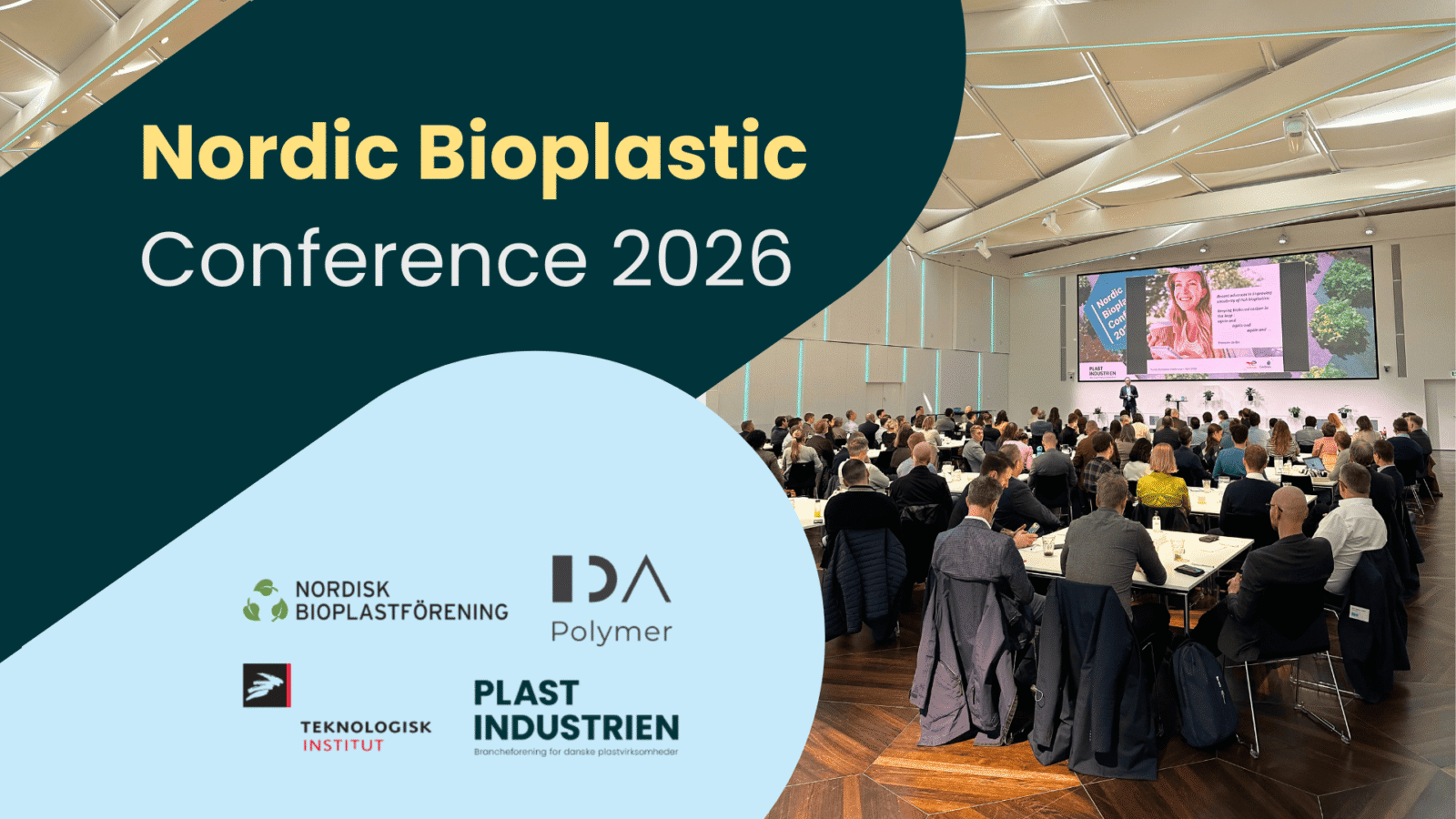
Nordic Bioplastic Conference 2026 focuses on how bioplastics are actually assessed, selected and implemented in products and systems today.
Focus: informed decision-making
The conference moves beyond advocacy and addresses bioplastics as a professional and strategic material choice:
- When do bioplastics make sense?
- What trade-offs must be considered?
- Where are the limits?
What you will gain
You will meet leading experts, organisations and decision-makers from across the bioplastics value chain and gain insights into:
- Latest technological developments in bioplastics
- Market trends and industrial applications
- The evolving European regulatory landscape
- The role of biobased and biodegradable plastics in a circular economy
This year’s programme explores:
- Current trends in bioplastics and material development
- How technology is evolving – and how regulation responds
- The role of biobased and biodegradable plastics in circular systems
Networking and exchange across the value chain
The conference gathers companies, researchers, policymakers and industry organisations working with bioplastics. Expect case studies, expert insights and opportunities for dialogue throughout the day.
Stay tuned on www.plast.dk or contact us directly at bioplasticconference@plast.dk
Tabletop exhibition
As in previous years, the conference includes a bioplastics tabletop exhibition. Industry delegates can apply for a café table and bring samples, cases and a roll-up.
To apply for an exhibition table, please contact: bioplasticconference@plast.dk
Pre-Conference Networking Dinner – 15 April 2026
Following requests for more networking opportunities, we invite participants to join an exclusive pre-conference dinner the evening before the conference.
The dinner will take place at Restaurant Vækst, known for its contemporary Nordic cuisine and green, atmospheric setting. The evening includes:
- Seasonal three-course dinner
- Wine pairing
- Private dining room
- Vegetarian option available
The dinner offers a relaxed setting for valuable networking with fellow professionals and an opportunity to meet selected speakers.
Participation is available at a small additional cost and can be added during registration. Seats are limited.
Nordic Bioplastic Conference is organised by:
Program
09:40 - 10:05
09:40 - 10:05
In this keynote, Lorenza Romanese, Secretary General of European Bioplastics, will provide an overview of the latest EU policy developments and how they are shaping the future of biobased, biodegradable and compostable plastics in Europe. She will reflect on the role these materials can play in advancing the EU’s circular economy ambitions and strengthening Europe’s competitiveness, while also highlighting the strategic work of European Bioplastics to support industry–policymaker dialogue. The keynote will conclude with a forward-looking perspective on what lies ahead for market growth and the wider deployment of sustainable materials.
10:05 - 10:30
10:05 - 10:30
An exploration of how targeted policy interventions can accelerate the adoption of biobased and biodegradable materials in the Netherlands. The emphasis is on packaging and the ways in which policy measures can influence circularity, Extended Producer Responsibility (EPR), and overall system costs. By strengthening biowaste collection, reducing contamination, and diverting more food waste from incineration, these interventions help unlock the full potential of compostable packaging within a circular economy.
10:30 - 10:55
10:30 - 10:55
While innovation in bioplastics is accelerating, many solutions struggle to move beyond niche applications. For industry, compatibility, reliability, and scale remain decisive factors. This talk will focus on how A.P. Møller owned Vioneo develops bio-based polyolefins designed for direct use in existing manufacturing and recycling systems. Using concrete examples, the presentation will highlight how material design, production technology, and collaboration across the value chain are critical to moving bioplastics from pilot projects to industrial reality. The talk will also reflect on what policymakers, material producers, and converters need to do to accelerate adoption.
11:25 - 11:50
11:25 - 11:50
This presentation will outline the LEGO Group’s engagement with biomaterials, since the introduction of plant-based plastic in selected botanical elements in 2018.
Subsequently, the talk will address key methodological and practical challenges associated with the environmental assessment of bioplastics.
Topics will include the evaluation of feedstock types, approaches to carbon footprint accounting for biopolymers, potential land-use impacts, and the social implications linked to agricultural production systems.
The presentation will emphasize the importance of robust, transparent, and science-based assessment frameworks in supporting responsible material decision-making.
11:50 - 12:15
11:50 - 12:15
At Novo Nordisk, advanced polymer science is used to develop next-generation biobased materials. This talk presents how polyhydroxyalkanoates (PHAs) can be engineered into high-performance thermoplastics by combining polymer structure–property knowledge, processing expertise, and additive design. Drawing on real industrial cases and waste-based feedstocks from pharmaceutical production, the presentation offers concrete insights into scalable, competitive, and future-ready polymer development.
13:40 - 14:05
13:40 - 14:05
The BioSinn project identified product applications where biodegradation is an appropriate end-of-life solution, particularly for items that cannot be collected or recycled and risk microplastic pollution. The project produced 25 application fact sheets assessing feasibility, alternatives, regulation, and market volumes. This presentation highlights key findings, recent developments since 2021, and introduces the follow-up project PerPlacsBio on plastics in agriculture and forestry.
14:05 - 14:15
14:05 - 14:15
Solserv and Food2Farm deliver solutions for breaking down organic waste such as food scraps and compostable packaging. The waste is decomposed within 24 hours and reduced by approximately 80–95%, while producing a powerful organic fertilizer. This reduces transport of waste with 80–95% water content and lowers CO₂ emissions. A circular and sustainable solution that solves the waste problems and generates a strong fertilizer that can be used for cultivation, as well as being a step toward future preparedness systems.
14:45 - 15:10
14:45 - 15:10
Grounded ApS transforms spent coffee grounds into high-performance, fully compostable bioplastic materials. This presentation traces the company’s journey from urban waste streams to coffee-based biocomposites for cups and food-service applications. It covers collection and preprocessing in Denmark, material development for heat resistance and end-of-life performance, and real-world pilots with Nordic partners. By addressing challenges such as feedstock variability, processing, certification, and scaling, the presentation shows how circular design and local value chains can turn coffee waste into scalable climate and waste-reduction solutions for sustainable packaging.
15:10 - 15:35
15:10 - 15:35
Society urgently needs safer and more sustainable polymers, yet current materials still pose environmental and health risks. Traditional polymer development is too slow to meet 2050 sustainability targets. Polymer Informatics, using AI and machine learning, offers a faster approach to polymer design and property prediction. This presentation outlines the state of AI-driven materials design and key challenges such as data scarcity and polymer representation. Using polymer biodegradability as a case study, the study shows that classification models—particularly an extreme gradient boosting classifier—can effectively screen polymers, achieving a balanced accuracy of 0.864. The work demonstrates the potential of data-driven methods to accelerate the development of sustainable polymers.
15:35 - 16:00
15:35 - 16:00
Ghost fishing and marine plastic pollution drive the need for biodegradable alternatives to conventional fishing gear. Existing bioplastics often lack sufficient strength and durability for practical use. The project focuses on the development of high-performance biodegradable plastic blends and presents laboratory results and field tests demonstrating their potential to reduce ghost fishing while meeting industry performance requirements.
The program is updated continuously.
The venue
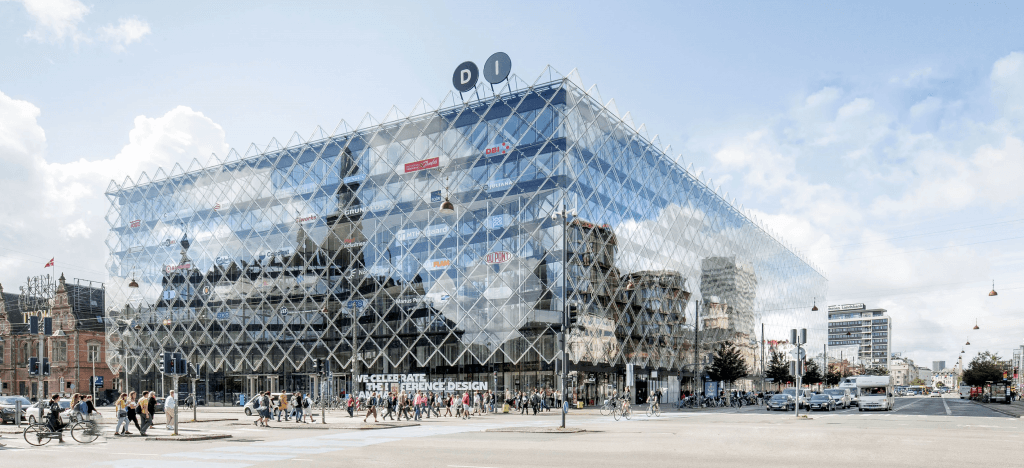
The Nordic Bioplast Conference 2026 will take place in Industriens Hus, an iconic and modern conference venue located right in the heart of Copenhagen.
Industriens Hus is home to the Confederation of Danish Industry and offers state-of-the-art facilities, elegant design and an atmosphere that supports both inspiration and networking.
The ticket includes breakfast, lunch, coffee breaks and networking drinks.
Whether you’re joining us for the knowledge or the people, the setting will make it a day well spent in one of Copenhagen’s most vibrant meeting spots.
Buy tickets here:
The event has already taken place. You can read more and view highlights from the Nordic Bioplastic Conference 2026 here.